Unicorn Books and the Serious Business of Magical Thinking
September 12, 2026 · 5 min read · by LittleVolumes
The unicorn phase is not just glitter. Magical thinking is a vital stage of development, and the right magical books feed imagination, courage and comfort. Here is what the sparkle is really doing, and the personalized unicorn adventure that puts your child in the enchanted garden.
At some point, usually around age four, a certain kind of child discovers unicorns, and the household enters its shimmer era. Unicorn pajamas, unicorn cups, a firm verbal commitment to becoming a unicorn upon growing up. It is easy for adults to file the phase under glitter and wait it out. That would be underselling one of childhood's most useful obsessions. The unicorn phase sits exactly on top of the developmental window psychologists call magical thinking, and fed properly, with the right stories, it exercises imagination, courage and comfort in ways that outlast every sticker. Here is what the sparkle is really doing, and how to make the most of it.
Why unicorns, specifically?
Every childhood obsession encodes a wish. Dinosaurs are power at a safe distance. Superheroes are agency. Unicorns are something subtler: gentleness that is also magic. A unicorn is majestic, powerful, rare, and completely kind. It will not roar at you or fight anyone. Its whole mythology is about purity, healing and choosing special people to reveal itself to.
For a small child, that last part is the hook: unicorns SELECT. To be the child a unicorn befriends is to be certified special by the most beautiful creature in the world. Which is why unicorn play is rarely about battles and always about friendship: being chosen, riding together, being trusted with the magic. The unicorn phase, decoded, is a child rehearsing the feeling of being singular and beloved, and practicing gentleness as something strong rather than weak. There are worse curricula.
What is magical thinking doing for development?
Between roughly two and seven, children live with the boundary between real and magical set to permeable. Wishes might work. Toys might feel. Somewhere, plausibly, unicorns. Developmental psychology treats this not as error but as equipment: magical thinking is imagination under construction, and it does real work.
- Counterfactual muscle. Imagining what is not, a garden where flowers sing, is the same cognitive machinery behind later creativity, planning and problem-solving. Fantasy is reasoning practice wearing wings.
- Symbol fluency. A stick that IS a wand is a mind mastering representation, the skill underneath reading and math, where marks stand for things.
- Emotional rehearsal at a safe distance. Magical stories let children feel fear, loss, hope and awe with the safety on. The dark forest can be faced when a unicorn walks beside you.
- Hope infrastructure. The conviction that wonderful hidden things exist is, in child form, the same muscle adults use for optimism. Guard it.
The phase self-resolves; by seven or eight the border firms up on its own. Nothing is gained by hurrying it, and a childhood's worth of imagination is built by feeding it while it is open.
What makes a good unicorn book?
The unicorn shelf is crowded and uneven. What separates the keepers:
| Look for | Skip |
|---|---|
| A real story, discovery, friendship, gentle quest | Glitter with no plot |
| The child as active hero, not passenger | Heroes who only watch the magic |
| Gentleness portrayed as strength | Sass-based unicorn personalities |
| Lush, wonder-rich garden and forest scenes | Flat merchandise-style art |
| A warm, safe resolution | Peril that outruns the coziness |
The active hero point matters most. The wish inside the phase is to be IN the magic, chosen by it, so the best unicorn stories make the child character do the discovering, the befriending, the helping. Which leads to the obvious upgrade.
What does the personalized unicorn book do differently?
The entire unicorn fantasy is I am the one the unicorn chooses. A personalized book stops gesturing at that wish and grants it, by name and by face.
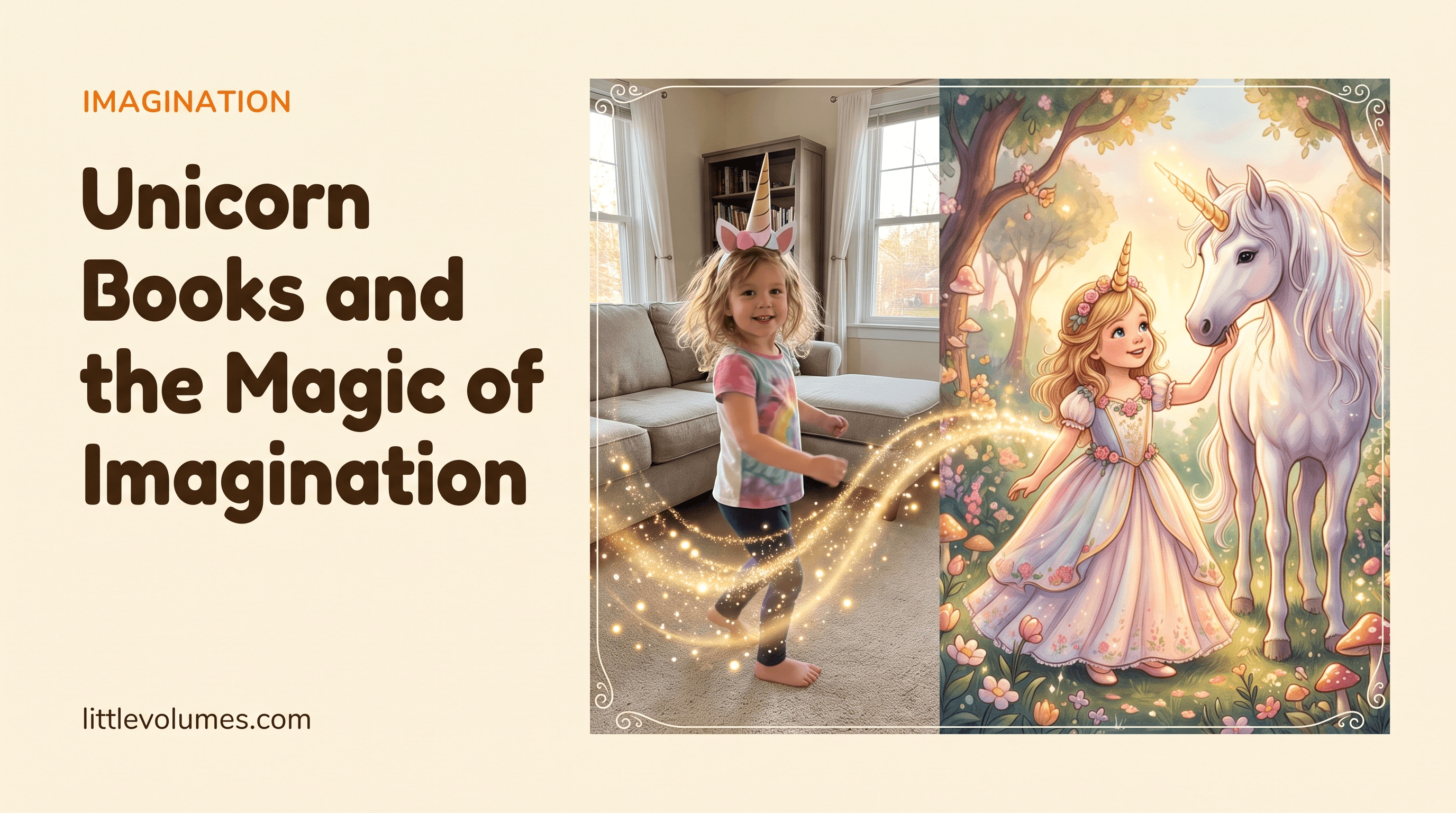
In our Unicorn Garden book, your child, illustrated from your photos, finds their way into a hidden magical garden and is chosen as the unicorn's friend, wonder, gentleness and a little brave helping included. Their name is in every line; the child in the enchanted garden is unmistakably, checkably them. For a child at peak phase, the effect on engagement is what personalization research predicts and parents confirm: this becomes THE book, requested nightly, narrated from memory, defended from siblings.
Beyond the delight, the identity payload is a good one: chosen, kind, gentle, brave, the unicorn story's values, attached to the child's own image at the age identity is soft. And for reluctant readers in the phase, it is the classic conversion tool: caring what happens next is automatic when it is happening to you.
The first page previews free, your child in the magic within seconds, the digital book arrives within 24 hours, and the printed keepsake glitters metaphorically only, being made of sturdy book-grade paper rated for five hundred readings.
How do you play along with the phase?
Cheap, high-wonder moves for the shimmer era:
- Evidence of magic. A trail of sequins to a tiny thank-you note. Ten minutes of parental mischief, a memory for decades.
- The garden hunt. Any park becomes a unicorn habitat survey: where would it drink, sleep, hide? Observation skills, disguised.
- Horn craft. Paper cone, ribbon, headband. The dress-up basket does the rest.
- Gentleness missions. Unicorns only visit gentle homes, is a house rule of tremendous utility, care for the pet, soft hands with the baby, all suddenly enchanted.
- Read, then believe a little. After the story, water the garden flowers together, just in case. The just in case is where childhood lives.
The takeaway
The unicorn phase is magical thinking in its party clothes, imagination, hope and gentleness being built under a layer of glitter. Feed it stories with real wonder and active heroes, play along with the evidence, praise the gentleness it venerates, and let the border between real and magical close on its own unhurried schedule. And for the child who wants, more than anything, to be the one the unicorn chooses, grant the wish properly: the book where the chosen child in the enchanted garden has their face and their name. They will believe it completely. That is not a bug of this age. It is the entire point.
Let the unicorn choose your child: preview the book free, or wander the full catalog of personalized adventures.
Frequently asked questions
Why do kids love unicorns so much?
Unicorns are gentleness with power, a creature strong enough to be magic and soft enough to be a friend. For children aged 3 to 7, deep in magical thinking, unicorns embody beauty, specialness and benevolent magic, which is exactly the emotional weather they prefer.
Is magical thinking normal in children?
Not just normal, developmentally important. Between roughly 2 and 7, children naturally blur fantasy and reality, and this magical thinking exercises imagination, symbolic reasoning and hope. It fades on its own schedule, and it should be enjoyed rather than corrected.
Do fantasy books benefit child development?
Yes. Fantasy stories stretch counterfactual thinking, imagining what is not, which underpins creativity and problem-solving. Studies suggest children process and discuss fantastical content deeply, and magical stories are also where children safely rehearse fear, hope and wonder.
What age is the unicorn phase?
Typically ages 3 to 7, peaking around 4 to 6, overlapping the magical thinking window. Like dinosaur and space phases it is an intense interest, great for reading motivation, and it ends on its own, usually replaced rather than outgrown.
Is there a personalized unicorn book?
Yes. LittleVolumes makes a unicorn garden adventure where your child, illustrated from your photos with their name throughout, enters a magical garden and befriends its unicorn. There is a free preview before you buy, your child in the magic, visible in seconds.
Are magical stories confusing for kids about what is real?
No, research shows children track the fantasy-reality border better than adults assume, they know stories are stories. The magic is not confusion, it is practice, imagination running with the safety on.