Under the Sea, Why Ocean Books Enchant Young Kids
September 4, 2026 · 4 min read · by LittleVolumes
Coral reefs, dolphins and mermaid dreams. Ocean books are a doorway to wonder, empathy and early science for young children. Here is why the sea captivates kids, what to look for in ocean books by age, and the personalized underwater adventure that puts your child in the reef.
Show a young child a coral reef, in a book, an aquarium tunnel or a snorkeling video, and watch their face do the thing. The ocean is the closest real place to a fairy tale: a hidden world under a silver ceiling, glowing with color, populated by creatures no illustrator would dare invent. Ocean books bottle that wonder and hand it to a child at bedtime, and they smuggle in more learning than almost any other picture-book genre. Here is why the sea works so hard for young minds, and how to choose books that make the most of it.
Why does the ocean captivate children so completely?
Three reasons, stacked:
It is genuinely otherworldly. Children spend their days in a world of chairs and schedules. The reef is an alien planet forty minutes from the coast: fish like jewels, forests made of animals, an octopus that changes color. No suspension of disbelief required, because it is all real.
It is hidden. The surface hides everything, and children are connoisseurs of the hidden. Every ocean story begins with the oldest hook in storytelling: what is under there?
It is big enough to hold a little awe. Psychologists find that experiences of awe, of something vast and beautiful beyond the self, measurably increase generosity and curiosity, in children as well as adults. The ocean is most children's first taste of it. A five year old looking at a whale next to a diver is doing philosophy without the vocabulary.
That mix, real, hidden, vast, makes ocean books uniquely potent: fantasy-level wonder with a nonfiction backbone.
What should ocean books look like at each age?
| Age | What works | Watch out for |
|---|---|---|
| 2 to 3 | Bright reefs, friendly fish, splash sounds, counting and colors | Dark deep-sea scenes, realistic predators |
| 3 to 5 | A child explorer with a safe vehicle, bubble, sub or dolphin guide, creature friends with names | Peril played straight, sharks as villains |
| 5 to 8 | Reef fact books beside the stories, real footage, gentle conservation themes | Doom-heavy environmental framing |
Two notes worth pinning. First, the safe vehicle matters for younger children: a magic bubble or a dolphin guide gives the child a psychological handrail, letting them enjoy the depths with zero fear. Second, keep early conservation themes hopeful. A reef that gets HELPED is empowering; a reef that is doomed teaches helplessness. Children who love the ocean first will protect it later.
What does a personalized ocean book add?
Every child watching an aquarium tunnel is imagining the same thing: being IN there. A personalized underwater book makes that literal.
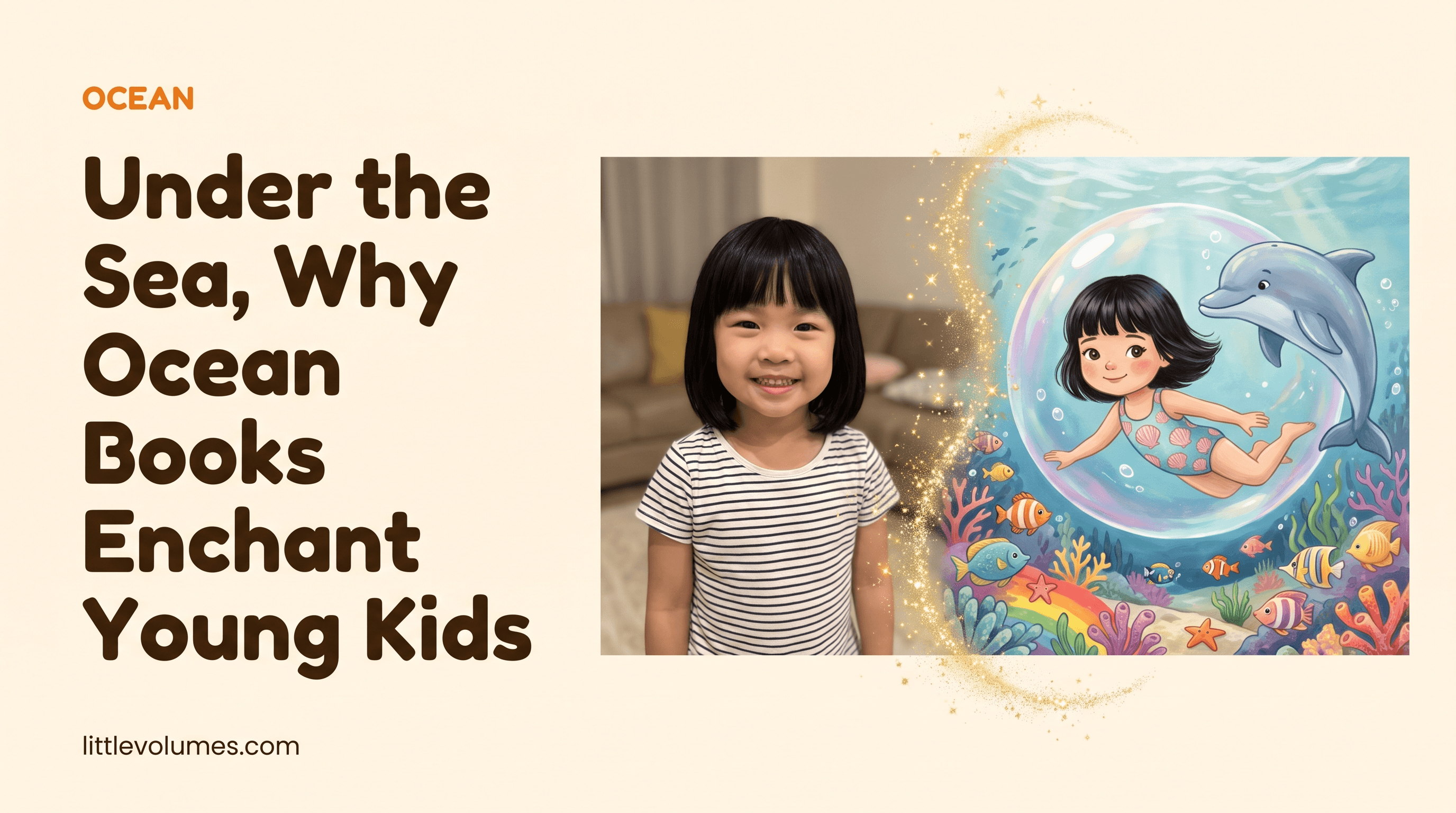
In our Under the Sea book, a whispering seashell calls your child down into the blue. Wrapped snug in a magic bubble, with Splash the dolphin as guide, they discover the reef's Rainbow Pearl is missing and the colors are fading. The sparkle trail leads past a sleepy turtle to a dark cave, where the culprit turns out to be no villain at all, just Ollie, a shy little octopus who wanted some light in the dark. Your child does the truly heroic thing: invites him home to the reef. The pearl returns, the colors explode, and the sea has a new friend, because of them.
Their face, illustrated from your photos, swims through every page. And the story quietly teaches the best pair of lessons in the genre: wonder for the ocean, and kindness for the lonely. Parents of shy children in particular tell us the Ollie storyline lands somewhere deep.
Digital delivery within 24 hours, printed keepsakes worldwide, and the first page previews free, your own child in the bubble, which tends to seal the deal on sight.
How do you extend ocean love beyond books?
The sea travels well into ordinary life:
- The aquarium day. The single highest-wonder-per-dollar outing in childhood. Go AFTER the book is beloved; walking the tunnel as the kid from the reef story is a different experience entirely.
- Rock-pooling and beach days. Real crabs beat perfect ones. A bucket, a shore and an hour make a marine biologist.
- Bathtub reef. A few sea creature toys convert every bath into a story re-enactment. The book scripts the game.
- Blue planet, small doses. Nature documentary clips of reefs and dolphins, chosen for beauty rather than drama, extend the wonder on rainy days.
- The care habit. One concrete ritual, we always take our litter home from the beach, plants the conservation seed at exactly the right depth for a preschooler.
The takeaway
Ocean books do something rare: they deliver full fairy-tale wonder while telling the truth. Choose bright and friendly for the little ones, keep a safe bubble around the young imagination, pair the magic with the real thing at every chance, and let the sea do what it has always done to human beings, pull them in. And for the child who presses their face to the aquarium glass, give them the book where they are finally on the other side of it, bringing the colors back to the reef with their own hands.
Send your child under the sea: preview their ocean adventure free, or dive through the full catalog of personalized books.
Frequently asked questions
Why are kids fascinated by the ocean?
The ocean is a real place that behaves like a fantasy world, hidden, glowing, full of creatures stranger than anything invented. For children it offers mystery and beauty with a hint of the unknown, which is the exact recipe for wonder.
What are good ocean books for a 3 year old?
At three, choose bright reef scenes, simple friendly sea creatures, splashy sounds and repetition, and stories where a child explores safely, in a bubble, a little submarine or with a dolphin guide. Save realistic deep-sea darkness for older kids.
What do children learn from ocean books?
Early marine science arrives free with the story, creature names, habitats, big and small, and gentle care-for-nature values. Ocean books are also rich in color and counting content, and they build empathy through creature characters kids adore.
How do I teach my child to care about the ocean?
Start with love, not lectures. Children protect what they adore, so books, aquarium visits and rock-pooling build the bond first. Small concrete habits, taking litter home from the beach, follow naturally once the reef feels like a friend's home.
Is there a personalized ocean book?
Yes. LittleVolumes makes {name} Under the Sea, where your child, illustrated from your photos, dives in a magic bubble to bring the colors back to a fading reef, with a dolphin guide, a sleepy turtle and a shy octopus who just needed a friend. Free preview before you buy.
Are mermaid stories good for kids?
Wonderful, in the same way dragons and superheroes are, they are wish-fulfillment with fins. Mermaid and merboy play is imagination exercise, and pairing it with real reef books gives a child both the magic and the marine science.