Superhero Books for Kids, Why Every Child Needs to Be the Hero
September 6, 2026 · 5 min read · by LittleVolumes
Superhero play is how children rehearse power, courage and goodness. Here is what the research says about superhero obsessions, how to steer them toward kindness, and the personalized superhero book where the cape belongs to your child.
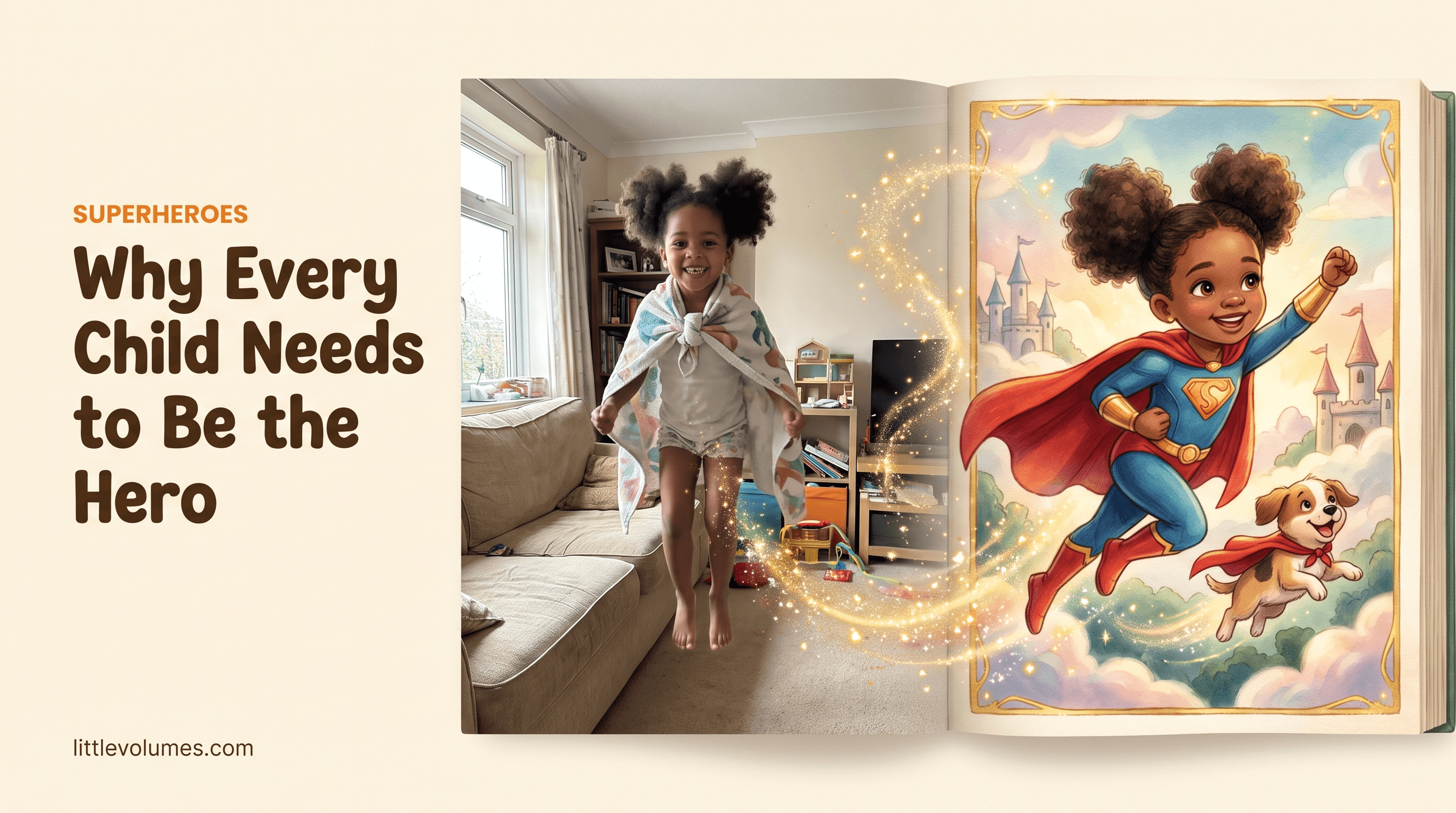
At some point between the third and sixth birthday, a towel gets tied around a small neck, a piece of furniture becomes a launchpad, and a parent hears the words that define an era: I am a SUPERHERO. The superhero phase is one of early childhood's great universals, and it is routinely underestimated. Underneath the whooshing is a child doing urgent psychological work, rehearsing power, courage and goodness in the only laboratory available to them. Here is what the phase is really about, how to steer it toward kindness, and why the strongest superhero book on any shelf is the one where the cape belongs to your child.
Why do children need superhero play?
Consider the daily life of a four year old: dressed by others, scheduled by others, buckled, guided, corrected and carried. Competent adults tower over every hour. Superhero play is the exact inversion: for twenty minutes, the smallest person in the house is the strongest being in the universe. That is not escapism. Developmental psychologists describe pretend hero play as power rehearsal, a safe way to experience agency, courage and mastery before life supplies the real thing.
The research is broadly reassuring. Pretend play of this kind is linked to confidence, emotional regulation and perspective-taking, and a well-known study found children persisted longer at hard tasks when pretending to be a hero character, the so-called Batman effect. Imagining themselves as someone strong literally makes children stronger at what they are doing.
The phase has a design flaw, though, and every parent knows it: the mainstream superhero script solves everything by punching. Which is why the steering matters.
How do you steer superhero play toward kindness?
You do not fight the cape; you rewrite the job description. Children take their scripts from stories, so change the stories and the play follows. The moves that work:
- Assign helping missions. Rescue the kitten from the sofa mountain. Deliver supplies to the sick teddy. Find Dad's keys with super-vision. Mission structure keeps all the drama; helping content changes what is rehearsed.
- Praise the save, not the strength. You HELPED him, that is what heroes do lands the value where you want it. Strength is the costume; helping is the identity.
- Introduce the quietest superpowers. Super-listening. Super-noticing when someone is sad. Super-gentleness with the baby. Children accept these instantly when a story has modeled them, and they are the powers that transfer to the playground.
- Choose books with child heroes who help. Adult franchise heroes fight supervillains; child book heroes rescue kittens and comfort friends. For ages 3 to 7, the second script is developmental gold and the first can wait.
Handled this way, the superhero phase becomes a multi-year kindness curriculum the child enrolled themselves in, voluntarily, with costumes.
What makes a personalized superhero book different?
Every superhero story makes one implicit promise to the child listening: this could be you. A personalized superhero book removes the word could.
In our Super book, the mysterious box on the doorstep is addressed to your child. The glowing red cape fits THEM. Their face, illustrated from your photos, does the flying, and their name is on every mission: the kitten in the oak tree, the runaway bread wagon, the great windy-day umbrella rescue. And then comes the page the whole book is built around: a sad little boy alone by the swings, and a hero who does not fly, but sits down and listens. Sometimes that is the most super thing of all. The town cheers, and the story lands its truth: the cape did not make the hero. The kindness did.
For a child deep in the phase, this book does three things at once:
- It fulfills the fantasy completely. Not a hero like them. Them. Attention and re-read demand follow accordingly, which is how a phase gets converted into a reading habit.
- It installs the kind-hero script at the source. The child rehearsing heroism in play now rehearses THIS version, missions, helping, listening, because it is what their own story says heroes do.
- It feeds identity. Children build self-image from evidence, and a book in which they are brave and kind is evidence of the most usable sort. I am someone who helps outlasts the cape by decades.
The first page previews free, the digital book arrives within 24 hours, and the printed keepsake survives being read inside blanket forts, which this one frequently is.
What activities pair with the superhero phase?
- The rescue course. Cushions, chairs and a stuffed animal in peril. Gross motor development with a plot.
- The kindness patrol. A weekend walk with a mission: hold one door, return one dropped glove, wave at one baby. Real-world helping, gamified.
- Cape craft. A tea towel, fabric pens, their initial. Twenty minutes of craft, months of use.
- Hero of the day. At dinner, everyone reports one save: someone they helped, or who helped them. The family gratitude practice, in costume.
- Read, then fly. The tight loop as always: story at breakfast, missions before lunch. Story-fed play runs longer and kinder.
The takeaway
The superhero phase is not noise to be endured; it is the sound of a child rehearsing bravery and goodness at maximum enthusiasm. Steer the script toward helping, praise the saves, honor the quiet powers, and the phase will quietly build the exact person you are hoping to raise. And for the child who already knows in their bones that they are meant for the cape, give them the confirmation: the book where the hero flying over town, rescuing kittens and sitting with the sad kid has their own face and name. The kindness was theirs all along. The book just makes it official.
Hand your child the cape: preview their superhero book free, or browse the full catalog of personalized adventures.
Frequently asked questions
Why is my child obsessed with superheroes?
Superhero play is power rehearsal. Small children control almost nothing in their day, and capes let them try on strength, speed and courage safely. It is a normal, healthy phase, typically peaking between ages 3 and 7, and it can be steered toward empathy and helping.
Is superhero play good or bad for kids?
Mostly good, with steering. Research links pretend hero play to confidence, perspective-taking and moral reasoning. The concerns, roughness and conflict-as-solution, are addressed by emphasizing the helping side of heroes over the fighting side.
How do I encourage kindness through superhero play?
Redefine the job description. Give missions that involve rescuing, helping and listening rather than battling, and praise the helping loudly. Stories where the hero's real power is kindness give children a script where goodness IS the strength.
What are good superhero books for a 4 year old?
Look for child heroes rather than adult franchises, missions about helping rather than fighting, humor, and warm endings. At four, a story where the hero rescues a kitten and comforts a sad friend lands better than any villain plot.
What is a personalized superhero book?
A storybook where your child is the illustrated superhero, their face and name throughout, discovering a glowing cape and learning that the cape did not make the hero, the kindness did. Made from photos you upload, with a free preview before buying.
When do kids grow out of the superhero phase?
Usually between 7 and 9, as play interests shift to games with rules and franchises with lore. The self-image built during the phase, I am someone who helps, outlasts the cape by decades, which is why the phase is worth investing in rather than waiting out.