Do Potty Training Books Actually Work? A Parent's Guide
August 13, 2026 · 6 min read · by LittleVolumes
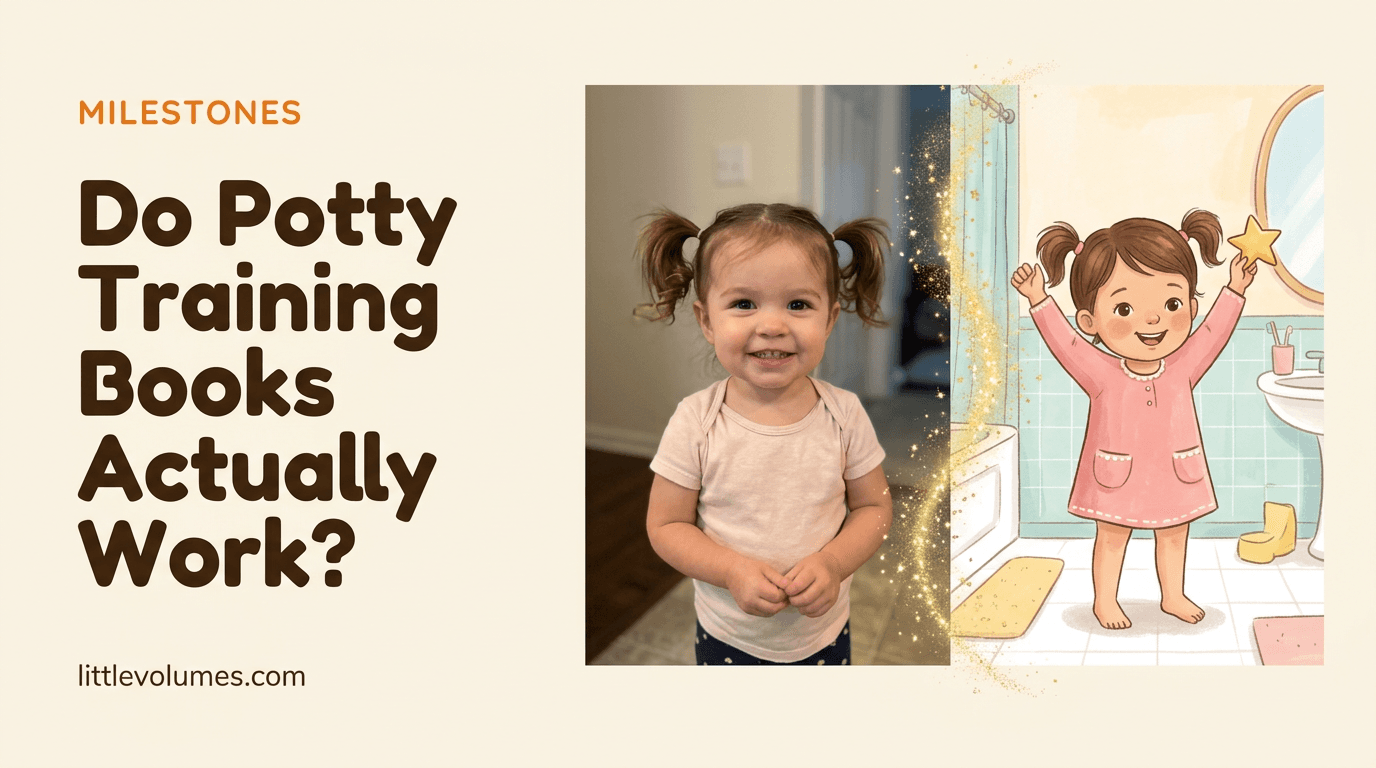
Potty training books can make a stressful milestone feel friendly and doable. Here is the evidence on how they help, the real signs of readiness, a gentle week-one plan, what to do about accidents and setbacks, and why a personalized potty book motivates like nothing else.
Few parenting milestones carry as much anticipation, advice and quiet dread as potty training. And few have a gentler secret weapon than a good book. Potty training books will not do the job alone, but used well they change the emotional weather of the whole project: the potty becomes familiar instead of foreign, the process becomes a story your child already knows the ending of, and you get a script for the hard moments. This guide covers what the books genuinely do, when to start, how to run a calm first week, how to handle accidents and regressions, and why a personalized potty book out-motivates every sticker chart in the house.
Do potty training books actually work?
Honest answer: yes, as part of a routine, and no, not as a magic wand. Here is what a good book reliably does:
- Makes the strange familiar. A toddler who has toured the process in a story twenty times is not meeting a bizarre new ritual on day one. They are recognizing something they already know.
- Lowers fear. Some children are genuinely unsettled by the potty, the flush, the change. Watching a calm character do it, page after page, drains the alarm out of it.
- Provides a model to copy. Imitation is the engine of toddler learning. A story character using the potty is a rehearsal your child runs in their head.
- Gives everyone shared language. "Just like in the book" is worth a hundred explanations at this age.
What no book can do is supply readiness or consistency. Those come from your child's development and your routine. The book is the lubricant, not the engine, and expecting it to be the engine is where the "we read the book and nothing happened" stories come from.
When should you start potty training?
The single best predictor of fast, low-tears training is starting when your child is actually ready, not when a birthday or a daycare deadline arrives. Most children hit readiness between 18 months and 3 years. Look for a cluster of these signs:
- Stays dry for two hours or more at a stretch
- Notices, announces or objects to a wet or dirty diaper
- Shows interest in the toilet, or wants to watch and imitate family members
- Can follow simple two-step instructions
- Can pull pants up and down with minimal help
- Increasingly insists on doing things independently
A useful rule: it is easier to wait for readiness than to manufacture it. Children pushed before readiness commonly train slower and with more friction than children who started later but ready. If you are between the two, the low-cost move is to start reading potty books now, weeks before any actual training, and let interest build on its own.
How to run a gentle first week
There are several respectable methods, from casual to intensive, and the best one is whichever your family can apply consistently. A calm middle path that works for many:
- Two weeks before: seed the story. Read a potty book daily, let your child pick out underwear, put the potty in the bathroom to be met with no agenda.
- Day one: switch and narrate. Diapers off during waking hours, underwear on. Offer the potty at natural intervals, after waking, after meals, before leaving the house, with a light touch: "Potty time" beats "Do you need to go?", which a toddler will answer no on principle.
- Celebrate attempts, not just results. Sitting counts. Trying counts. The celebration should be warm and brief, a high five and a "you did it, just like in your book", not a parade that makes the next miss feel like a failure.
- Expect accidents and stay boring about them. "Accidents happen, let us get dry clothes." Nothing else. Calm is the whole technique.
- Keep the book in rotation all week. It is now the reference manual your child actually respects.
Night training is a separate, later milestone driven by bladder maturity and hormones, commonly a year or more behind daytime. Keep night diapers without guilt until mornings are reliably dry.
What about accidents, refusals and regressions?
The three classic wobbles, and the calm response to each:
| Wobble | What is usually going on | What helps |
|---|---|---|
| Accidents after success | Absorbed in play, or routine changed | Boring cleanup, resume rhythm, no scorekeeping |
| Refusing the potty | Power struggle or fear | Drop pressure for a week, keep reading the book, return casually |
| Sudden regression | New sibling, new school, stress, or constipation | Address the stressor, see the pediatrician if physical causes are possible |
The pattern across all three: pressure backfires, calm compounds. A child cannot be argued into continence, but nearly every child walks there on their own schedule when the path is kept friendly.
Why a personalized potty book motivates like nothing else
Every potty book offers a model to imitate. A personalized book offers the strongest model that exists: your child themselves.
Imitation research is clear that children copy models more readily the more similar the model is to them. A generic bunny using the potty is a nice example. Your child, with their own face and name, being the proud successful hero of the story is not an example at all. It is a preview. The book shows them a version of themselves that has already done it, and toddlers find that version deeply convincing. On a resistant morning, "remember how you did it in your book" reframes the whole project from something being asked of them to something they already are.
Parents also tell us the personalized book solves the celebration problem elegantly: the story ends in exactly the warm, proportionate pride you want to model, every single reading.
Our Potty Champion book makes your child the hero of that story, illustrated from a few photos you share, with the calm, encouraging tone this milestone needs. Digital copy within 24 hours, printed keepsake available, and a first page you can preview free before buying.
The takeaway
Potty training goes best when it feels, to your child, like a story about them succeeding rather than a campaign being waged upon them. Wait for real readiness, keep the routine consistent and the accidents boring, celebrate warmly and briefly, and put a book in the rotation that makes the whole thing familiar. Better still, make it a book where the champion on the last page has your child's face. That is the version of the story they will want to make true.
Make your child the hero of their own potty story: try it free, or browse the full catalog of personalized milestone books.
Frequently asked questions
Do potty training books really work?
They work well as one part of a consistent routine. A book alone cannot train a child, but it makes the potty familiar before you start, lowers fear, gives your child a friendly model to imitate, and hands you shared language for the process. Paired with readiness and routine, that is a real advantage.
What age should I start potty training?
Most children show readiness between 18 months and 3 years, with the average around age 2 and a half. Signs matter far more than age. Starting when your child is genuinely ready typically makes training faster than starting early does.
What are the signs my toddler is ready to potty train?
Staying dry for two hours or more, noticing or announcing a wet or dirty diaper, interest in the toilet or in watching others use it, ability to follow simple instructions, pulling pants up and down, and a growing wish to do things independently. You do not need every sign, but a cluster of them.
How long does potty training take?
For a ready child with a consistent approach, day-to-day skill often arrives within a few weeks, though full reliability, especially at night, can take months longer. Night dryness is a separate developmental milestone that can lag daytime training by a year or more, which is normal.
What should I do when my child has accidents?
Stay boring about it. A calm "accidents happen, let us get dry clothes" protects the progress. Punishment and visible frustration reliably backfire, creating anxiety that causes more accidents and sometimes withholding. If accidents suddenly spike after success, look for stressors and rule out constipation or infection with your pediatrician.
Why use a personalized potty training book?
Toddlers learn by imitating models, and the more similar the model, the stronger the effect. A book where your own child is the character using the potty and celebrating gives them the most persuasive model possible, themselves, already succeeding. On wobbly days, remember how you did it in your book is a powerful line.