Personalized Books for Kids, The Complete Parent's Guide
August 9, 2026 · 6 min read · by LittleVolumes
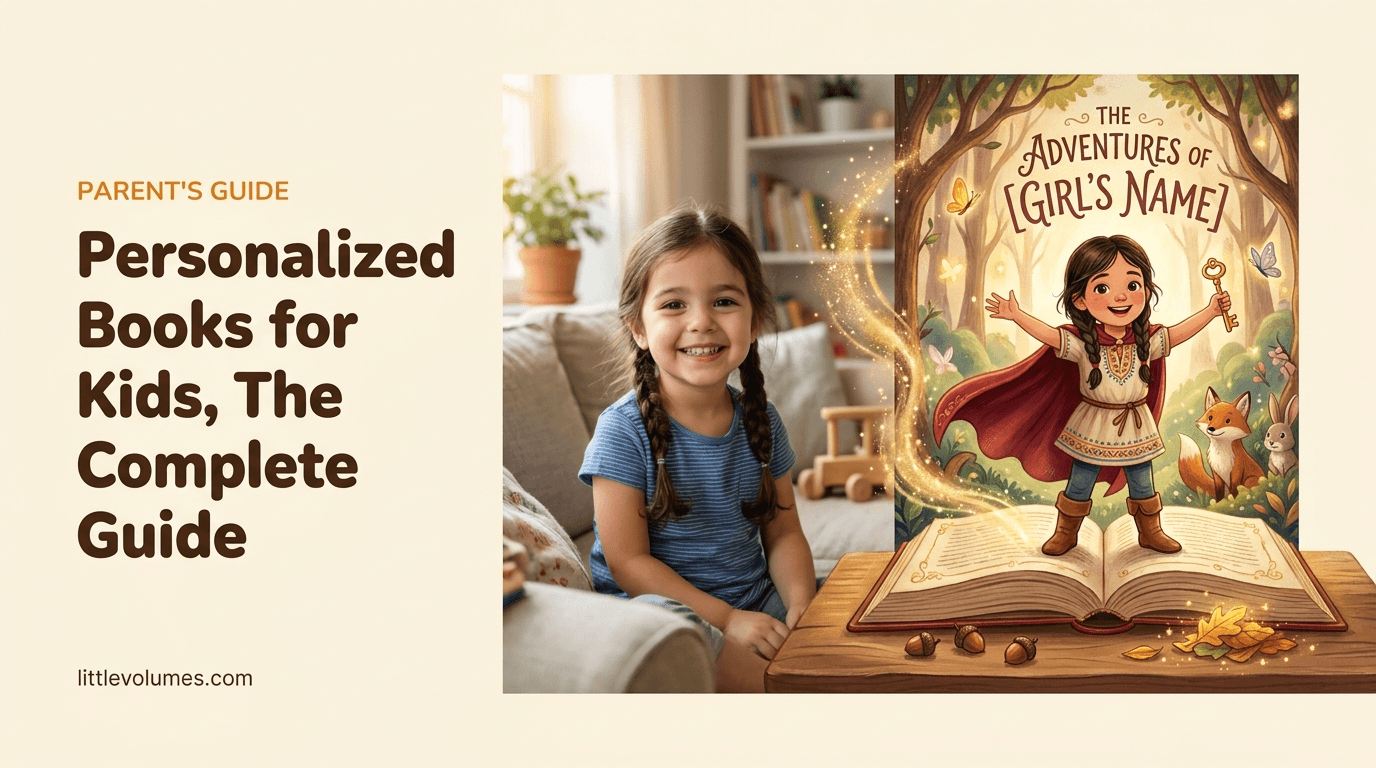
Everything parents ask about personalized children's books, answered. What they are, how they are made, why kids respond so strongly, what ages they suit, how to choose a good one, and what to look for before you buy.
Every parent has watched it happen: a child hears their own name in a story and their whole face changes. Personalized books are built entirely around that moment. Over the past few years they have gone from novelty gift to one of the most loved categories in children's publishing, and if you are researching them for the first time, the questions pile up fast. What exactly are they? Do they actually do anything for a child beyond the novelty? Which age is right? How do you tell a good one from a lazy one? This guide answers all of it.
What is a personalized children's book?
A personalized book is created for one specific child. At the simple end, that means the child's name is printed into the story. At the fully personalized end, the child IS the story: their name on the cover, their face, hair and features illustrated as the main character on every page, their family details woven through the plot.
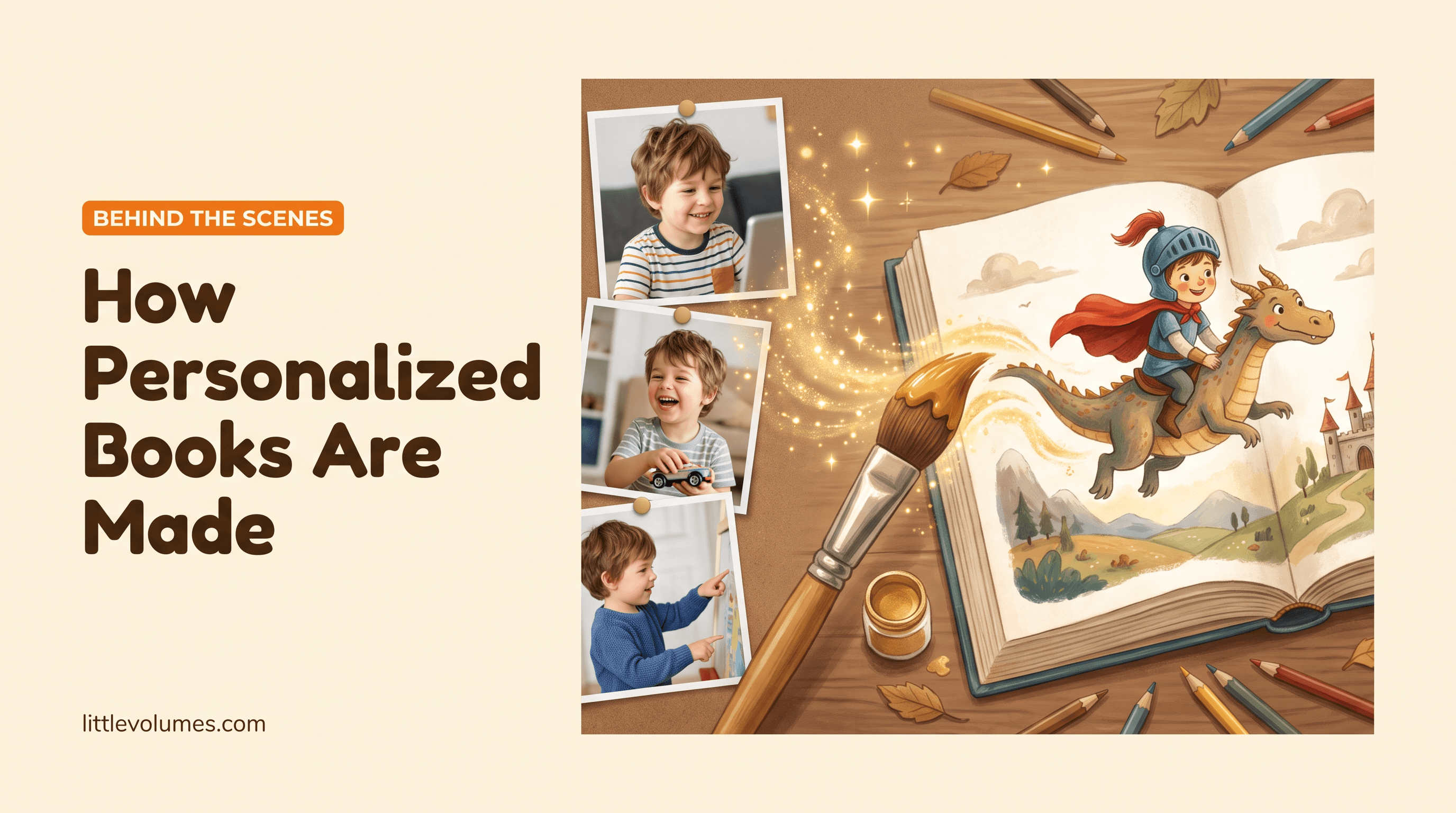
That second kind is what this guide focuses on, because it is where the remarkable effects live. Modern personalized books are made to order: you pick a story, share the child's name and a few photos, and illustration is produced showing that child as the hero, walking through dinosaur lands, calming first-day-of-school nerves, or counting their own sleepy toes. Delivery is typically a digital book within hours or days, with a printed softcover or hardcover keepsake shipped to your door.
Why do children respond so strongly to being in the story?
The short answer: attention and identity, the two most valuable things in early childhood learning.
Attention. Research on personalized stories consistently finds that children attend longer and engage more deeply when the story is about them. Attention is the gate every other benefit of reading passes through: vocabulary, comprehension, the habit itself. A book that reliably holds a child's attention is worth several that do not.
Identity. Young children are building their sense of who they are, and they build it partly from the stories around them. A child who repeatedly sees themselves portrayed as brave on the first day of school, kind to a new sibling, or capable of counting to ten is collecting evidence about themselves. Psychologists who study early self-concept take this seriously: seeing yourself succeed, even in a story, genuinely feeds the belief that you can.
There is also a plainly practical effect every parent of a reluctant reader should know. The hardest problem in getting a child to read is making them care what happens next. When the character is them, they care automatically. Personalized books are, for many families, the first book a book-avoidant child ever requests.
What ages do personalized books suit best?
| Age | What the child gets | Best story types |
|---|---|---|
| 0 to 2 | A keepsake read TO them; recognition begins near 2 | Gentle rhymes, goodnight stories, new baby books |
| 2 to 4 | Full recognition delight, identity effects begin | Bedtime, counting, colors, potty training, new sibling |
| 4 to 6 | Deep story engagement, milestone rehearsal | Starting school, big feelings, adventures, ABC books |
| 6 to 8 | Reading motivation, pride of ownership | Longer adventures, custom stories from family life |
The heart of the range is ages 2 to 8. Below 2, the book functions as a beautiful keepsake and a photo-rich bonding read. Above 8, children shift toward chapter books, though a fully custom story about their own life can land well beyond that.
How are personalized books actually made?
The process at a quality maker looks like this:
- You choose a story from a catalog: bedtime, milestones, learning themes, adventures, or a fully custom story written from your prompts.
- You enter the child's details: name, and for multi-child stories, siblings too.
- You upload a few clear photos. Face visible, decent light. These are the reference for the illustrations.
- The child is illustrated into every scene, matching hair, skin tone and features consistently from the cover to the last page.
- You receive the book: typically a digital copy quickly, within 24 hours at the fastest makers, and a printed keepsake by mail if ordered.
Two practical tips from the production side: photos with the face clearly visible and unobstructed produce noticeably better likenesses, and it is worth checking how a maker handles revisions if you want a detail adjusted.
How do you choose a good personalized book?
The category has exploded, and quality ranges from genuinely beautiful to name-pasted-into-template. Five checks separate them:
- Is the child in the illustrations, or just the text? Name-only personalization is the shallow end. The strong effects come from the child seeing themselves.
- Is the likeness consistent across pages? Flip through a full preview if offered. The child on page 9 should be recognizably the child from the cover.
- Does the story actually use the personalization? The best stories are built around the child's presence, not generic tales with a name swapped in.
- Can you preview before you pay? Reputable makers show you the cover or first pages free. It is the fastest possible quality check.
- Digital, print, or both? Digital delights fast and travels well; print becomes the keepsake. The ideal is both, with printing on real book-grade stock, hardcover if you want it to survive years of re-reads.
At LittleVolumes, this is exactly how we build: your child illustrated throughout from your photos, a free preview before you commit, digital delivery within 24 hours, and printed softcover or hardcover keepsakes shipped worldwide. The catalog covers bedtime, starting school, new siblings, counting, feelings, dinosaurs and more, plus fully custom stories written from your own family's adventures.
When do personalized books make the best gifts?
Honestly, this category is at its best as a gift, because it does what gift-givers most want: it proves thought. Occasions where they consistently outperform toys:
- Birthdays, where a book about the birthday child arrives already about the most interesting subject in the room
- A new baby, both as a big-sibling book that stars the older child, and as a keepsake for the newborn
- Starting school or a new milestone, where the book doubles as preparation
- Holidays and grandparent gifts, where the same book can be ordered with extra printed copies so grandma keeps one at her house
- Long-distance relatives, for whom a personalized book says I know exactly who this child is, from any number of miles away
The gift logic is simple: toys are loved for weeks; a book where the child is the hero is read for years and kept for decades.
The takeaway
Personalized books earn their place through one honest mechanism: children care most about stories they are inside. That care buys attention, and attention buys everything else, engagement, vocabulary, confidence, and often a child's first real enthusiasm for books. Choose one where the illustration truly carries the child through every page, preview before you buy, and pick a story that meets your child where they are, whether that is bedtime wobbles, a looming first school day, or a dinosaur phase in full roar.
See your own child as the hero before you spend anything: try it free, or browse the full catalog of personalized books for ages 2 to 8.
Frequently asked questions
What is a personalized children's book?
A book created individually for one child, weaving their name, and in the best versions their face and likeness, into the story and illustrations, so the child is the main character. Modern versions are made to order from photos you upload and delivered as a digital book, a printed keepsake, or both.
Are personalized books good for child development?
Yes. Studies of personalized stories show children pay attention longer, engage more deeply and remember more when they appear in the book. Seeing themselves as a capable hero also supports self-esteem and makes reluctant readers far more willing to open a book.
What ages are personalized books best for?
The sweet spot is roughly ages 2 to 8. Toddlers light up at recognizing themselves, preschoolers get deep story engagement and confidence effects, and early readers get powerful motivation. Personalized baby books also work as keepsakes from birth, read to the child long before they understand.
How are personalized photo books for kids actually made?
You choose a story, enter your child's name, and upload a few clear photos. Illustrators or illustration systems then draw the child as the story's hero, matching hair, skin tone, features and expression across every scene. Good makers deliver a digital preview or full digital copy quickly, with a printed hardcover or softcover shipped afterward.
What should I look for when buying a personalized book?
Check that the child appears throughout the book rather than only on the cover, that illustration quality is consistent from page to page, that the story genuinely uses the personalization, that you can preview before paying, and that both digital and printed formats are available if you want a keepsake.
Are personalized books worth the price?
Compared to a mass-market picture book they cost more, but they are made individually for one child and tend to become the most re-read and longest-kept book in the house. As gifts, they routinely beat toys on longevity, since they are still on the shelf, and still meaningful, years after most toys are outgrown.